The Mental and Physical Health Benefits of Walking (Why Your Nervous System Loves It)
Walking is one of the most underrated mental health tools we have.
It’s simple. It’s accessible. It doesn’t require special equipment, a gym membership, or a “perfect” routine. And yet, walking has profound effects on both mental and physical health—especially when it comes to regulating stress, blood sugar, mood, and the nervous system.
This isn’t about hitting a step goal or “earning” your food.
This is about how walking supports your body and brain working together.
Walking as Bilateral Movement: Why It Calms the Nervous System
When you walk, your body naturally engages in bilateral movement—a rhythmic left-right pattern that involves both sides of the brain.
This matters more than most people realize.
Bilateral movement:
Activates both hemispheres of the brain
Helps integrate emotional and cognitive processing
Signals safety to the nervous system
Reduces physiological arousal (fight-or-flight)
This is one of the reasons walking feels calming even when you’re anxious, overwhelmed, or emotionally stuck. It’s also why walking is often used alongside trauma-informed therapies and grounding practices.
If you’ve ever noticed that your thoughts feel less intense or more organized after a walk—that’s not a coincidence.
Your nervous system is regulating in real time.
Walking and Mental Health: Anxiety, Mood, and Stress Relief
Walking has direct, measurable effects on mental health:
Reduces Anxiety and Stress
Lowers cortisol (the body’s primary stress hormone)
Helps regulate the autonomic nervous system
Reduces muscle tension and mental rumination
Unlike high-intensity exercise, walking does not spike stress hormones, making it especially helpful for people with anxiety, burnout, or chronic stress.
Improves Mood and Emotional Regulation
Increases serotonin and dopamine
Supports emotional processing
Creates mental “space” without forcing mindfulness
Many people find walking easier than sitting still and “trying to calm down.” Movement gives emotions somewhere to go.
Walking and Blood Sugar Regulation (Yes, Even Short Walks)
Walking plays a powerful role in blood sugar regulation, which directly impacts:
Energy levels
Mood stability
Cravings
Irritability and brain fog
Even a 10–15 minute walk after eating can:
Improve glucose uptake by muscles
Reduce blood sugar spikes
Decrease insulin demand
This matters because unstable blood sugar can feel like anxiety—shakiness, racing thoughts, irritability, fatigue. Supporting blood sugar is often a missing piece in mental health conversations.
This isn’t about “burning off” food.
It’s about helping your body use energy efficiently.
Cortisol, Stress, and Why Walking Is Different from Other Exercise
Not all movement affects stress hormones the same way.
While intense workouts can be beneficial, they also increase cortisol, which may not be ideal for:
Chronic stress
Anxiety disorders
Burnout
Hormonal dysregulation
Walking:
Lowers baseline cortisol over time
Supports circadian rhythm regulation
Encourages parasympathetic (rest-and-digest) activation
For many people, walking is the most supportive form of movement for nervous system healing.
Walking and Interoception: Reconnecting to Your Body
One often overlooked benefit of walking is how it improves interoception—your ability to notice and interpret internal signals.
Walking gently brings awareness to:
Breathing rhythm
Muscle tension
Energy levels
Emotional shifts
This makes walking especially helpful for people working to rebuild trust with their body after years of dieting, disconnection, or pushing through signals.
It’s movement that invites listening instead of overriding.
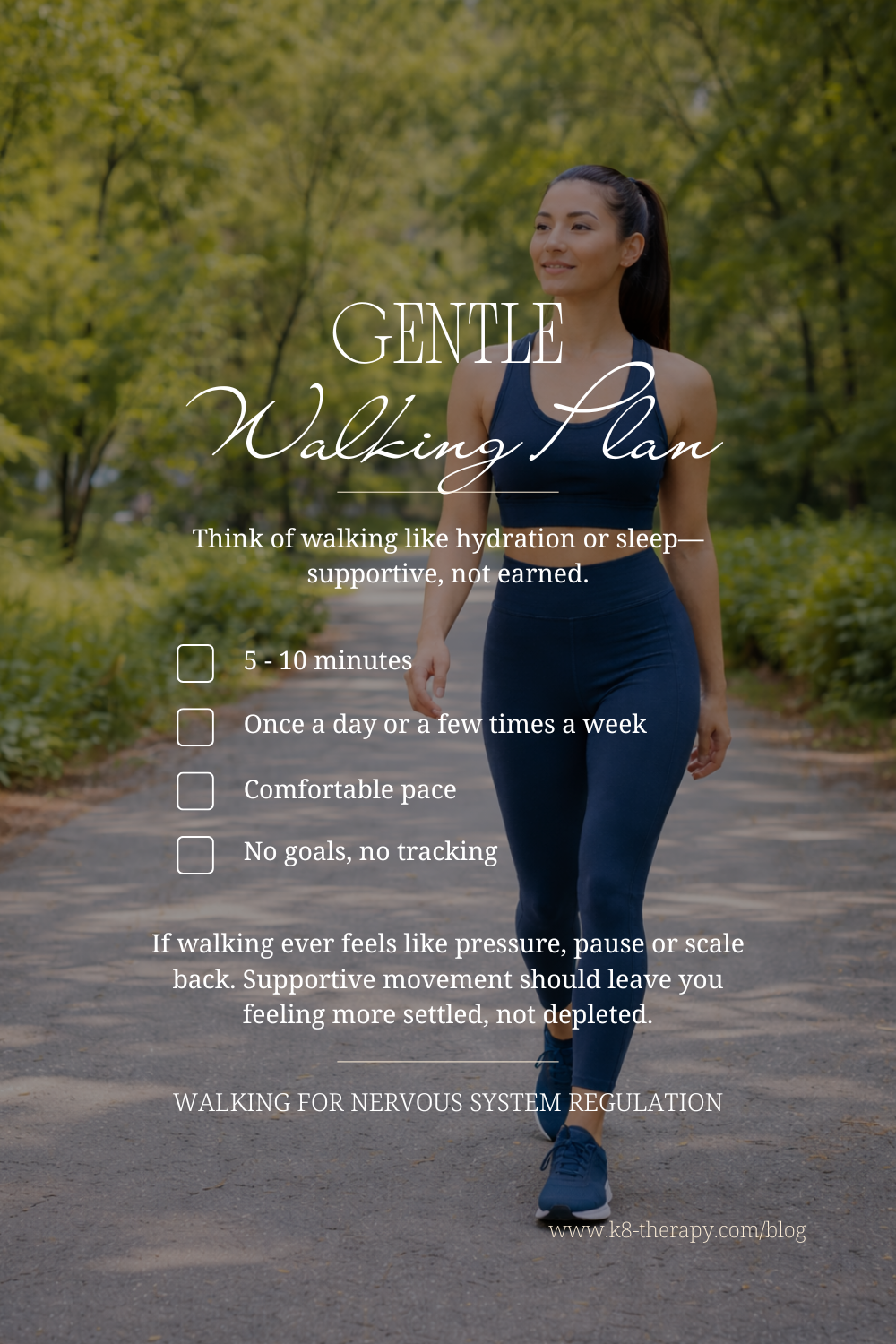
How to Use Walking as a Mental Health Tool (Without Making It a “Should”)
Walking doesn’t need to be perfect or structured to be effective.
Some supportive approaches:
Short walks instead of long ones
Walking without tracking or timing
Walking for regulation, not productivity
Walking when emotions feel loud
Walking after meals for blood sugar support
If walking starts to feel like another obligation, it’s okay to step back. The benefit comes from consistency and nervous system safety, not intensity.
Walking Is Not a Weight-Loss Requirement
This is important to say clearly.
The mental and physical benefits of walking exist independently of weight loss. Your body can experience regulation, improved mood, better blood sugar control, and reduced stress regardless of size or changes on the scale.
Walking is about health, not punishment.
Final Thoughts: Sometimes the Simplest Tools Are the Most Powerful
Walking is not flashy. It won’t promise a transformation in 30 days. But it quietly supports nearly every system involved in mental and physical health.
If you’re overwhelmed, dysregulated, or disconnected from your body, walking can be a starting point—not a solution you have to earn.
Sometimes, the most helpful thing you can do is put one foot in front of the other.