Somatic Release: How to Release Trapped Emotions and Tension at Home
What Is Somatic Release?
Somatic release is a natural process where the body lets go of stored tension, stress, or emotional energy. Many people experience emotional pain and trauma not only in their minds but also as physical sensations in their bodies. Somatic release techniques help you process and release these trapped emotions and chronic physical tension.
Why Does the Body Hold Tension and Trapped Emotions?
The body’s nervous system responds to stress and trauma by tightening muscles and activating protective mechanisms. When stress is unresolved, the body may retain tension or numbness, which can lead to chronic pain, fatigue, or emotional discomfort. Supporting somatic release at home can help restore balance and well-being.
How to Achieve Somatic Release at Home
Below are practical, evidence-based techniques for somatic release. These methods are safe for most people to try at home and can help you release trapped emotions and muscle tension.
1. Body Awareness Practice
Spend a few minutes each day scanning your body from head to toe.
Notice areas of tension, discomfort, or numbness without judgment.
This mindful body scan is the first step in somatic release.
2. Grounding Techniques
Stand barefoot on the ground or hold a textured object.
Focus on the sensations in your feet or hands to anchor yourself in the present moment.
3. Breathwork for Emotional Release
Try the "4-2-6" breathing technique: Inhale for 4 counts, hold for 2, exhale for 6.
Deep breathing calms the nervous system and supports somatic release.
4. Movement and Stretching
Gentle movement, walking, stretching, or yoga can help release tension.
Pay attention to how your body feels before, during, and after movement.
5. Self-Myofascial Release with Foam Rolling
Use a foam roller on large muscle groups (back, thighs, calves).
Pause on tender spots for 30–90 seconds, or longer (up to 2–5 minutes) if comfortable.
Foam rolling helps release muscle knots and supports somatic release.
6. Trigger Point Release
Use your fingers, a tennis ball, or foam roller to apply gentle pressure to tight spots.
Hold pressure for at least 30–90 seconds, or longer (up to several minutes) if needed.
Breathe deeply and notice any shifts in sensation or emotion.
7. Neck Stretcher or Cervical Traction
Use a neck stretcher device as directed (usually 5–10 minutes).
Focus on relaxing your neck and shoulders to release tension.
8. Progressive Muscle Relaxation
Tense each muscle group for 5–10 seconds, then relax for 20–30 seconds.
Move from your feet up to your face, noticing the difference between tension and relaxation.
9. Self-Massage
Massage tense areas with your hands or a massage tool for 1–3 minutes per area.
Use slow, circular motions and adjust pressure to your comfort level.
10. Emotional Expression Techniques
Allow yourself to sigh, hum, yawn, or vocalize for several breaths or up to 2–3 minutes.
Journaling about sensations or emotions can also support emotional release.
11. Bilateral Music for Somatic Release
Bilateral music features gentle sounds or tones alternating between the left and right ears, typically using headphones. This technique is used in therapies such as Brainspotting and can help regulate the nervous system, reduce anxiety, and support emotional processing.
Listen to bilateral music during your somatic release practice — such as foam rolling, body scanning, breathwork, or journaling — to enhance relaxation and facilitate emotional release.
Choose tracks specifically labeled as "bilateral stimulation music" or "EMDR music" for best results. Listen at a comfortable volume for 10–20 minutes while engaging in your chosen technique.
Signs of Somatic Release
During or after these practices, you may notice:
Trembling or shaking
Crying or emotional release
Yawning or sighing
Warmth or relaxation
A sense of lightness or relief
These are all signs that your body is letting go of stored tension and trapped emotions.
Safety Tips for Home Somatic Release
If you feel overwhelmed, pause and return to grounding techniques.
Do not apply excessive pressure or stretch beyond your comfort.
If you experience intense distress, consult a mental health professional.
How Often Should You Practice Somatic Release?
Start with 1–3 sessions per week and adjust as needed.
Consistency helps deepen the benefits of somatic release over time.
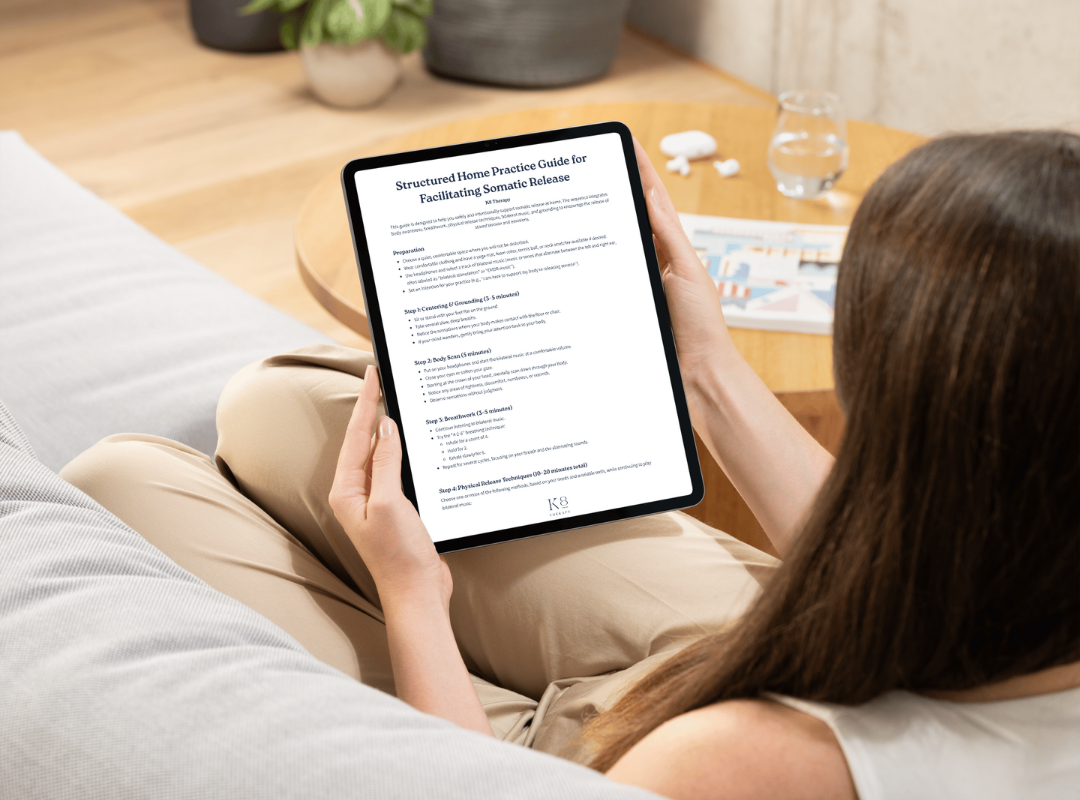
Click to Download
Final Thoughts
Somatic release is a powerful tool for releasing trapped emotions and physical tension. By integrating body awareness, breathwork, movement, foam rolling, and trigger point release into your self-care routine, you can support your emotional and physical well-being at home. Always approach your practice with patience and self-compassion.