The Gentle Current of Healing: How Bilateral Music Calms Your Nervous System (In and Out of Therapy)
Have you ever noticed how a certain song can instantly shift your mood, bring back a vivid memory, or make your chest feel a little lighter? Music has a profound connection to our emotions. But in the world of somatic healing and Brainspotting, there is a very specific type of sound that does something even deeper.
It’s called bilateral music.
If you read my previous post on Brainspotting, you know that this therapy works on the premise that where you look affects how you feel. We use specific eye positions (or "brainspots") to access and release emotional experiences and trauma frozen deep within the brain and body.
But in our sessions, you might also hear a gentle, ambient soundtrack playing softly through a pair of headphones. This isn’t just background noise to set a relaxing mood—it is a vital, intentional partner in your nervous system’s self-healing process.
Let’s dive into what bilateral music is, how it works on a neurological level, and how you can use this gentle yet powerful tool to support your well-being in everyday life.
What Is Bilateral Music?
Simply put, bilateral music is specially designed audio that gently alternates sound between your left and right ears.
Unlike normal stereo music where sounds are blended, bilateral tracks create a slow, rhythmic movement across the stereo field. You’ll hear a soft tone, chime, or instrumental wave flow from your left ear, drift across the middle, and settle into your right ear, before gently floating back again.
This rhythmic left-to-right movement is called bilateral stimulation. It is a foundational component of therapies like Brainspotting, designed to stimulate both sides of the brain in an alternating pattern.
How Bilateral Music Softens the Nervous System
When we experience trauma, prolonged stress, or anxiety, our nervous system gets stuck. The protective "fight-flight-freeze" response remains activated, and difficult emotions get frozen in the subcortical, deeper parts of our brain. Because these experiences are stored in our "emotional brain" rather than our logical "thinking brain" (the cerebral cortex), talking about them over and over isn’t always enough to help us find relief.
This is where bilateral music steps in. By engaging both hemispheres of the brain, it works directly on a neurological level to:
Soothe the Brain’s Alarm System: The gentle, rhythmic alternation of sound helps calm the amygdala—your brain’s emotional threat detector. When the amygdala gets the signal that you are safe, your autonomic nervous system can move out of high-alert and begin to regulate.
Bridge the Left and Right Hemispheres: Bilateral stimulation engages both sides of the brain, promoting hemispheric balance. This helps integrate your emotional, bodily experiences (typically processed more in the right hemisphere and subcortical brain) with your logical, cognitive understanding (processed in the left hemisphere).
Anchor You in the Present: The repetitive, predictable sway of the music acts as a gentle anchor. It encourages present-moment awareness and mindfulness, making it easier to stay grounded when difficult emotions arise.
Why We Use It During Brainspotting Sessions
In a Brainspotting session, we are purposefully bypassing the logical mind to access "trauma capsules" stored deep in the subcortical brain. Accessing these spots can sometimes bring up intense physical sensations, memories, or emotional waves.
Using bilateral music in the background provides several critical layers of support:
It Facilitates Deeper Processing: The music helps open the doorway to deeper layers of memory and emotion. It assists the brain’s natural processing mechanisms, helping "unstick" what has been frozen in time.
It Acts as a Safe Container: When heavy sensations or memories surface, the bilateral sound acts as a comforting, rhythmic container. It provides what we call neuro-lateral containment, helping you stay regulated and present in your body rather than feeling swallowed by the distress.
It Enhances the Somatic Release: Clients frequently report that having the music playing allows them to feel more relaxed, open, and connected to their inner somatic experiences, making the process of emotional release feel smoother and safer.
Your Everyday Coping Menu: Using Bilateral Music at Home
You don’t have to be in a therapy session to benefit from bilateral music. Because it is so effective at regulating the nervous system, it makes an excellent addition to your daily self-care and coping toolkit.
If you want to practice somatic release and stress reduction at home, here is how you can use bilateral music to calm your body and mind:
1. The Golden Rule: Use Headphones 🎧
To get the actual bilateral effect, you must use headphones or earbuds. If you play it out of a normal speaker, the sound waves will mix in the room, and your brain won't experience the alternating left-to-right stimulation.
2. Keep the Volume Whisper-Soft 🔉
This is the opposite of your favorite workout playlist. Bilateral music is meant to be played at a very low, barely-audible volume. It should drift in the background of your awareness. If you have to strain your ears just a tiny bit to hear the panning, that is the perfect volume. We want to soothe your nervous system, not overstimulate your auditory cortex.
3. Pair It with Your Somatic "Coping Menu"
Listening to bilateral music for 10 to 20 minutes can beautifully enhance your physical self-care practices. Try pairing it with:
A Mindful Body Scan: Lie down, close your eyes, listen to the music, and scan your body from head to toe, noticing areas of tension or numbness without judgment.
Somatic Release Movements: Use the music in the background while foam rolling, applying pressure to trigger points, or doing gentle stretching.
Grounding and Breathwork: Listen while practicing the "4-2-6" breathing technique (inhale for 4, hold for 2, exhale for 6) to quiet an anxiety spiral.
Mindful Journaling: Put your headphones on and let yourself free-write or draw, letting the music assist in organizing and processing your thoughts.
4. Enhance Your Sleep Routine 💤
If you have a racing mind at bedtime, try putting in comfortable earbuds and playing a slow bilateral track. The rhythmic panning mimics the natural brain patterns of REM sleep, helping you transition out of a busy day and ease into a restorative night's rest.
An Important Note on Emotional Safety
Because bilateral music is a tool that accesses deeper parts of the brain, a quick safety boundary is important: at-home listening is strictly for resourcing, relaxation, and grounding.
If you find that listening to the music starts to bring up overwhelming memories, intense emotional distress, or a high level of physical activation, please remove your headphones, take a break, and return to simple grounding practices (like feeling your feet flat on the floor or holding a textured object). Deep, unguided trauma processing is best saved for the safety and containment of our therapeutic sessions together.
Ready to Try It?
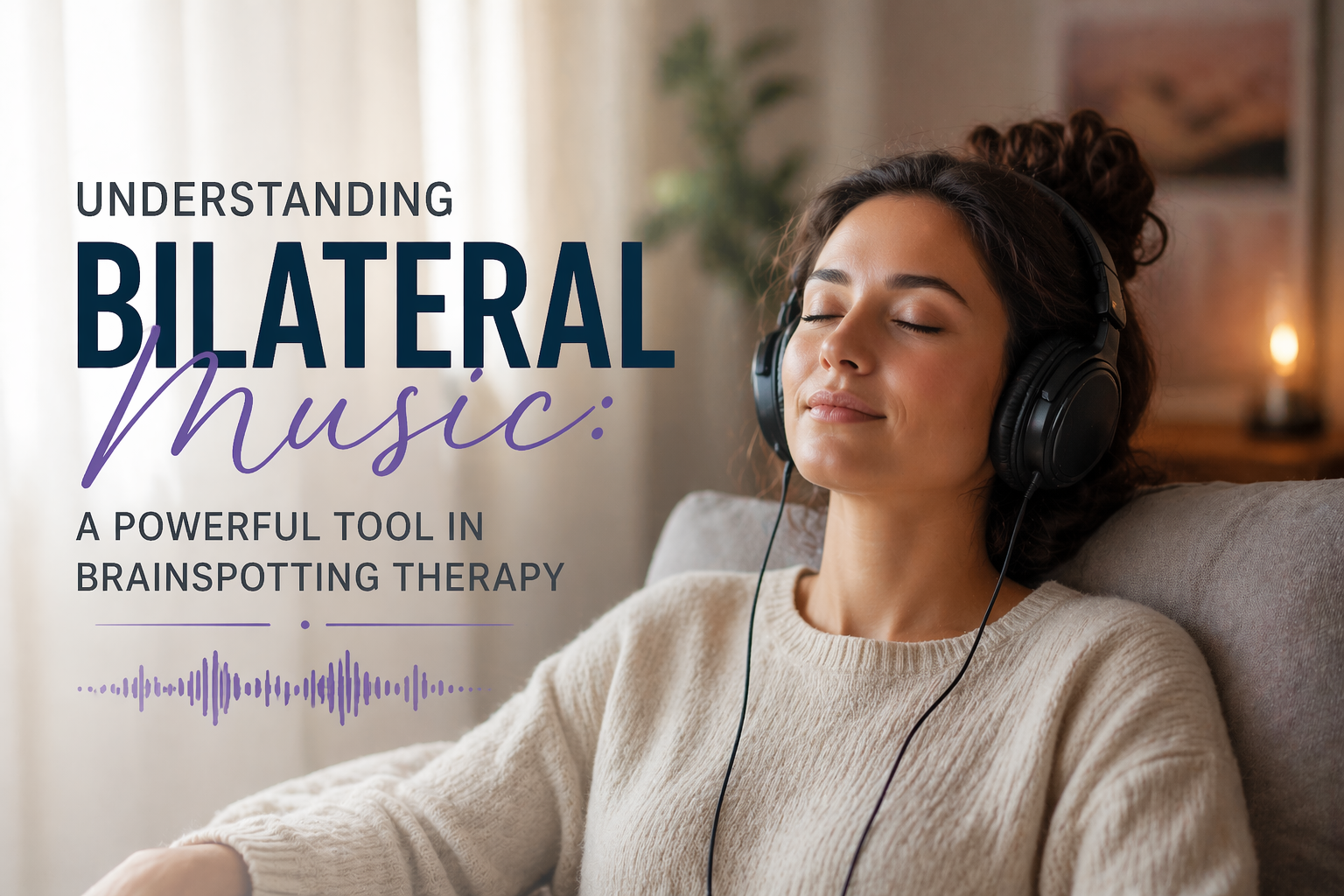
If you'd like to experience bilateral music for yourself, I have put together a few curated Spotify playlists that I use in my practice and personal life:
👉 The Brainspotting Session Playlist: The gentle, ambient tracks I use with clients in session to support deep processing.
👉 The Focus Playlist: Great for quiet work, studying, or organizing your thoughts.
👉 The Calm & Mindfulness Playlist: Perfect for reading, somatic practices, or winding down before sleep.
Give yourself just 5 or 10 minutes to sit comfortably, put your headphones on, close your eyes, and simply notice how your body responds to the rhythm.
Your healing journey is entirely unique, and you deserve tools that work with your body, not just your mind. If you have any questions about how to use bilateral music or want to explore Brainspotting in our work together, feel free to reach out.
👉 Are you an existing client? Let's chat about incorporating bilateral music or Brainspotting into our next session! 👉 Ready to get unstuck? Log into the Client Portal to book a session, or schedule a FREE CONSULTATION with me today to see how somatic therapy can support you!